
On this page
- How can fascia rot in such a dry place?
- What are the warning signs?
- How is rotten fascia replaced?
- What should the new board be?
- How should it be painted?
- Drip edge or gutter apron?
- What about the soffit?
- Which walls fail first?
- What about birds and pests?
- What does fascia repair cost?
- Who does the work?
- What should I ask?
- Parts of the roof edge
- How long does a fascia repair last?
How can fascia rot in such a dry place?
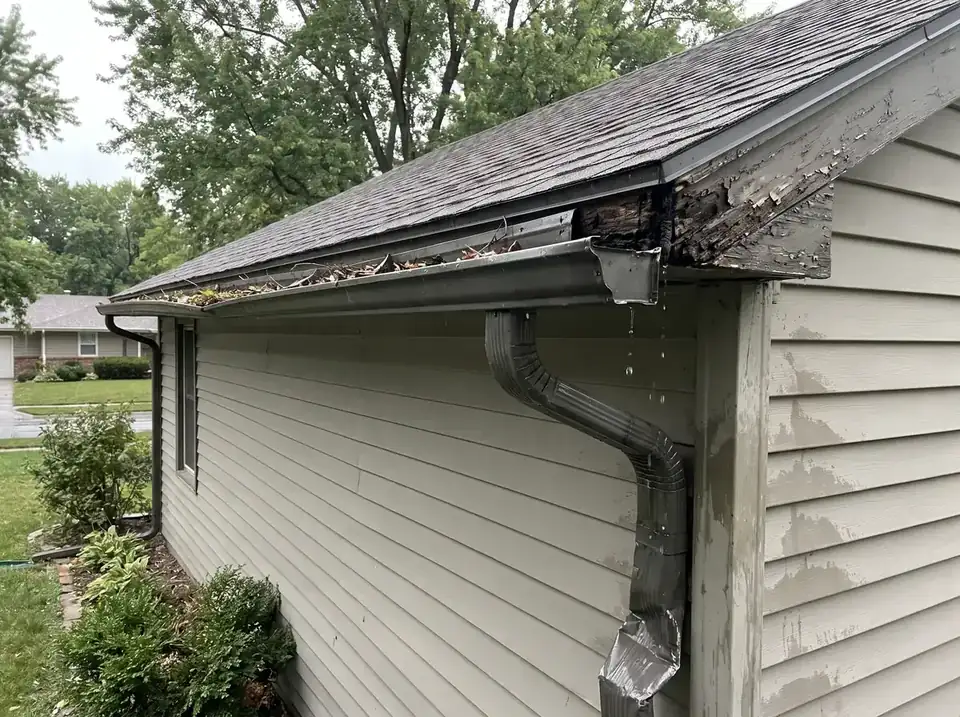
Because it is only dry for half the year. Summer sun, with 79 or so afternoons a year at 90 degrees and up, cracks and lifts paint and opens the end grain. Then from November to March, storms and tule fog keep that exposed wood damp, sometimes for days at a stretch. A gutter full of wet leaves holds water right against it. Season after season, the board rots from the back.
| Where the water comes from | Why |
|---|---|
| No drip edge on a shingle roof | Water curls under the shingles and down the board |
| Gutter set wrong under tile | Water drops behind the gutter, not into it |
| Leaking corners and end caps | Drips land on the same patch of wood |
| Failed paint | Bare grain soaks water up |
What are the warning signs?
- Paint peeling or blistering behind the gutter
- Dark stains just below the roof edge
- A gutter that sags again soon after being re-fixed
- Wood that gives under a screwdriver
- Wasps, bees, pigeons or rats getting into the eave
How is rotten fascia replaced?
- The gutter comes off along the bad stretch
- Rotten board is cut back to sound wood at a rafter
- Rafter tails are checked and repaired if they have decayed
- New board is primed on every face and every cut end, then nailed or screwed on
- On shingle roofs a drip edge or gutter apron goes in. On tile, the gutter line is corrected
- The gutter goes back on new hangers
What should the new board be?
| Material | Notes |
|---|---|
| Primed pine or fir | Matches what is there. Must be kept painted |
| PVC or composite | Cannot rot. Good on hot, exposed walls. Needs room to expand |
| Aluminum wrap over wood | Shields sound, dry wood from sun. Never wrap over rot |
How should it be painted?
Ideally while the gutter is off. New boards are primed on all faces and cut ends, then given two finish coats. Sound existing boards are scraped, spot-primed and painted. Light colors and a good exterior paint last longest in valley sun. Paint in the cooler part of the day.
Drip edge or gutter apron?
| Flashing | Shape | Typically fitted |
|---|---|---|
| Drip edge | A narrow strip with a small kick out | With a new roof |
| Gutter apron | A wider L that drops into the gutter | Later, slid under existing shingles |
Tile works differently. The tile overhangs the gutter, and the gutter must sit so water leaving the tile falls in. If it does not, the board behind takes the water.
What about the soffit?
The soffit is the underside of the eave. It rots when fascia damage spreads inward or a blocked gutter pushes water back under the roofing. Vented soffit also lets air into the attic, which matters in valley heat, so panels are replaced like for like and kept clear of insulation.
Which walls fail first?
South and west walls, where the sun cracks paint hardest, and any wall under a valley or a big tree, where the gutter stays full.
What about birds and pests?
Gaps in rotten fascia let in pigeons, starlings, bees and rats. Under rooftop solar panels near the eave, birds nest and drop debris into the gutter. Close the gaps when the board is renewed.
What does fascia repair cost?
It is priced per foot on top of the gutter work. Get the rate in writing before the gutter comes off, because the full extent of the damage often shows only then.
Who does the work?
Many gutter contractors replace fascia as part of the job. Rot reaching rafters or roof decking is for a carpenter or roofer. California requires a license for any job of $1,000 or more.
What should I ask?
- What is your rate per foot, and for which board?
- Will it be primed on every side and end?
- Will you fit a gutter apron, or correct the gutter under tile?
- What happens if the rafter tails are soft?
- Should that wall get new gutter too?
Parts of the roof edge
| Term | Plain meaning |
|---|---|
| Fascia | The trim board nailed across the rafter ends. On most Modesto houses the gutter screws into it |
| Soffit | The underside of the eave, from the fascia back to the stucco or siding |
| Rafter tail | The end of a rafter where it sticks out past the wall |
| Drip edge | Bent metal flashing laid under the first course of roofing. It throws water forward into the gutter |
| Gutter apron | A wider flashing shaped like an L. It slides under the roofing and drops into the gutter, sealing the gap behind it |
| Hidden hanger | A bracket clipped inside the gutter, held by a long screw through the gutter back into the fascia |
| Tile roof | Clay or concrete tiles laid on battens. Gutters must sit low enough for water leaving the tile lip to drop in |
How long does a fascia repair last?
A board primed on every face, painted, and sitting under a gutter that catches all the water should last decades. One left bare behind a dripping corner will be soft again in a few winters.